Bringing Your Horror Projects to Life with Little Ghost
There is a specific kind of magic that happens when typography aligns perfectly with a mood. You know the feeling: you are working on a project that needs to feel eerie, unsettled, or playfully macabre, and the standard fonts just aren't cutting it. Times New Roman feels too academic, and generic "scary" fonts often look like cheap Halloween decorations from a dollar store. This is where Little Ghost steps in. It isn't just a font; it is a stylistic tool designed to bridge the gap between professional design and atmospheric storytelling. As a cool and spooky display font, it offers a unique texture that can instantly transform the tone of your work without requiring complex graphic manipulation.
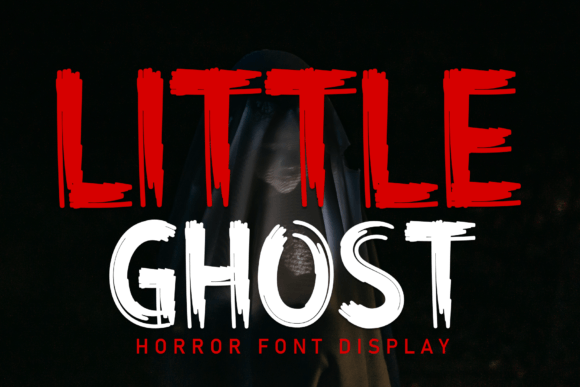
At its core, Little Ghost is a display typeface, meaning it is intended for headlines, titles, and short bursts of text rather than long paragraphs. Its character shapes are irregular, slightly jittery, and possess a hand-drawn quality that mimics the look of something written hastily in the dark or carved into a tombstone. However, unlike many novelty fonts that sacrifice readability for style, Little Ghost maintains enough structural integrity to be legible while still delivering that essential chill down the spine. It strikes a balance between being genuinely unsettling and undeniably charming, making it versatile for a wide range of creative endeavors beyond just traditional horror.
Real-World Applications for Designers and Creators
The true value of a font like Little Ghost reveals itself when you start applying it to real-world scenarios. It is not merely about having a spooky alphabet; it is about solving the problem of how to communicate a specific vibe instantly. Consider the world of independent publishing. Self-published authors of ghost stories, urban legends, or cozy mysteries often struggle with cover design. A title set in Little Ghost immediately signals to the browser on Amazon or a browser in a bookstore that this book contains elements of the supernatural. It sets expectations before the reader even opens the first page.
Similarly, event planners and party organizers find immense utility in this typeface. If you are designing invitations for a Halloween gala, a haunted house experience, or even a themed birthday party for adults, the font does half the heavy lifting for you. Instead of relying on clipart of pumpkins or bats to convey the theme, the typography itself becomes the decoration. When printed on textured cardstock or displayed on a digital invite, Little Ghost creates an immersive experience. It suggests that the event will be fun but with an edge, filtering out guests who might prefer a standard cocktail party and attracting those looking for something more memorable.
Digital Media and Content Creation
In the digital realm, the applications are equally robust. Content creators on platforms like YouTube or Twitch who focus on true crime, paranormal investigations, or horror gaming reviews need thumbnails that pop. The algorithm favors high-contrast, emotionally resonant images. Using Little Ghost for video titles or overlay text can increase click-through rates because the font triggers an immediate emotional response. It stands out against the clean, sans-serif fonts that dominate most social media feeds, acting as a visual hook.
Web designers working on portfolio sites for photographers who specialize in moody, low-key imagery can also benefit. Imagine a photographer whose work focuses on abandoned buildings or foggy landscapes. Using Little Ghost for the navigation menu or section headers adds a layer of narrative to the site. It tells the visitor that the images they are about to see are not just pictures; they are stories of decay and mystery. The font acts as a frame, enhancing the artwork rather than distracting from it.
Who Benefits Most from This Typeface?
While any designer can appreciate a well-made font, certain groups will find Little Ghost particularly indispensable. Graphic designers working in the entertainment industry, specifically those creating assets for indie games, will find it a goldmine. Indie horror games often rely on atmosphere over high-fidelity graphics. A user interface or a title screen rendered in Little Ghost can establish the game's identity within seconds. It saves development time by providing a ready-made aesthetic that fits the genre perfectly.
Small business owners in niche markets also stand to gain. Think of a local escape room business, a tarot card reader, or a shop selling vintage curiosities. Their branding needs to reflect their unique offering without looking unprofessional. Little Ghost allows these businesses to lean into their thematic roots while maintaining a level of design sophistication. It helps them avoid the trap of looking amateurish while still appealing directly to their target demographic of enthusiasts and collectors.
Even educators and workshop leaders who teach creative writing or illustration can use this tool. When assigning projects related to gothic literature or character design, providing students with access to a font like Little Ghost can spark creativity. It helps them visualize their concepts more concretely, moving ideas from abstract thoughts to tangible designs.
Practical Considerations Before You Download
Before you integrate Little Ghost into your next project, there are a few practical things to keep in mind to ensure the best results. First and foremost, remember that this is a display font. Its strength lies in its personality, which can become overwhelming if used in large blocks of text. Trying to read a five-page contract or a dense article written in Little Ghost would be exhausting for the eye. Reserve it for headlines, logos, pull quotes, and short captions. Pair it with a clean, neutral sans-serif or a classic serif for body text to create a balanced hierarchy that guides the reader smoothly through your content.
Licensing is another critical factor. Always check the specific license agreement associated with the font file. Some versions of Little Ghost may be free for personal use but require a commercial license for client work or products you intend to sell, such as t-shirts or book covers. Ensuring you have the correct rights prevents legal headaches down the road and supports the type designer's continued work.
Additionally, consider the medium of your final output. Little Ghost shines in high-resolution digital formats and print materials where the jagged edges and subtle imperfections of the letters can be appreciated. If you are working on a very small scale, such as a favicon or tiny mobile app icon, the details might get lost. In those cases, simplify your approach or use the font only in larger contexts within the design.
Maximizing the Impact of Your Design
To get the most out of Little Ghost, think about color and texture. While black on white is classic, this font often looks spectacular in off-whites, pale grays, or even blood reds against dark backgrounds. Experimenting with blending modes in software like Photoshop or Illustrator can make the text appear as if it is glowing, fading, or emerging from the shadows. Adding a subtle noise texture or a paper grain overlay can enhance the hand-crafted feel, making the digital text appear tactile and organic.
Ultimately, adding Little Ghost to your toolkit is about expanding your creative vocabulary. It gives you the ability to speak visually in a dialect of mystery and intrigue. Whether you are crafting a chilling invitation, designing a game title, or branding a quirky boutique, this font provides the atmospheric foundation you need. By understanding its strengths and respecting its limitations, you can create work that not only looks good but feels right, leaving a lasting impression on your audience long after they have looked away from the screen or put down the paper. Enjoy the results of letting your designs embrace the spooky side.